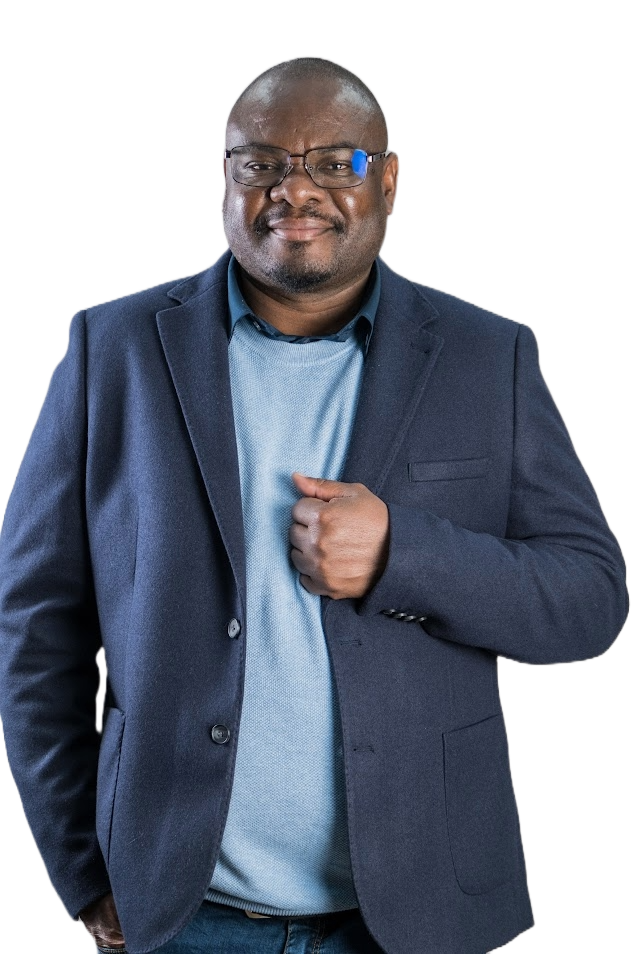
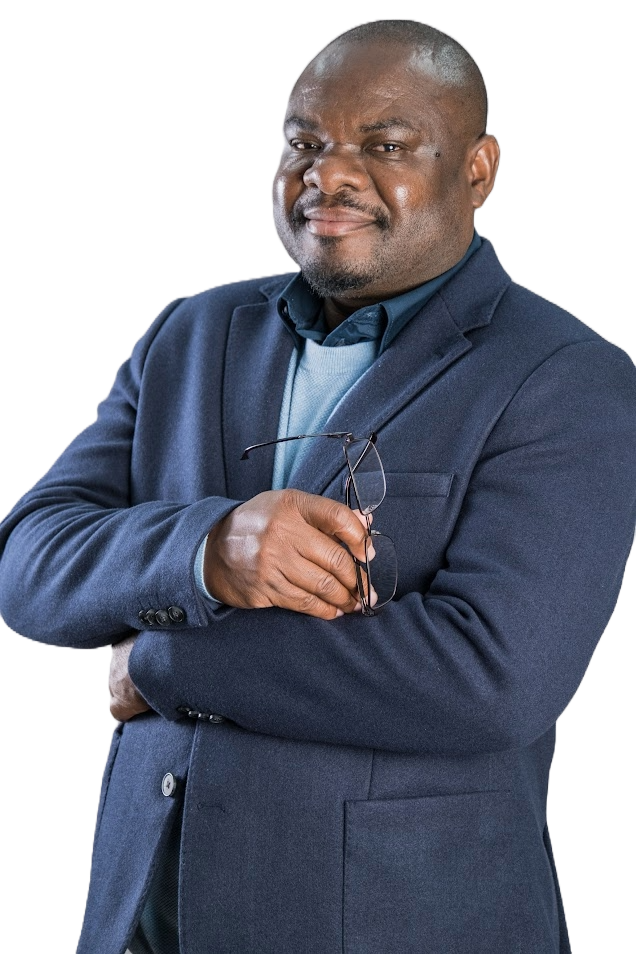
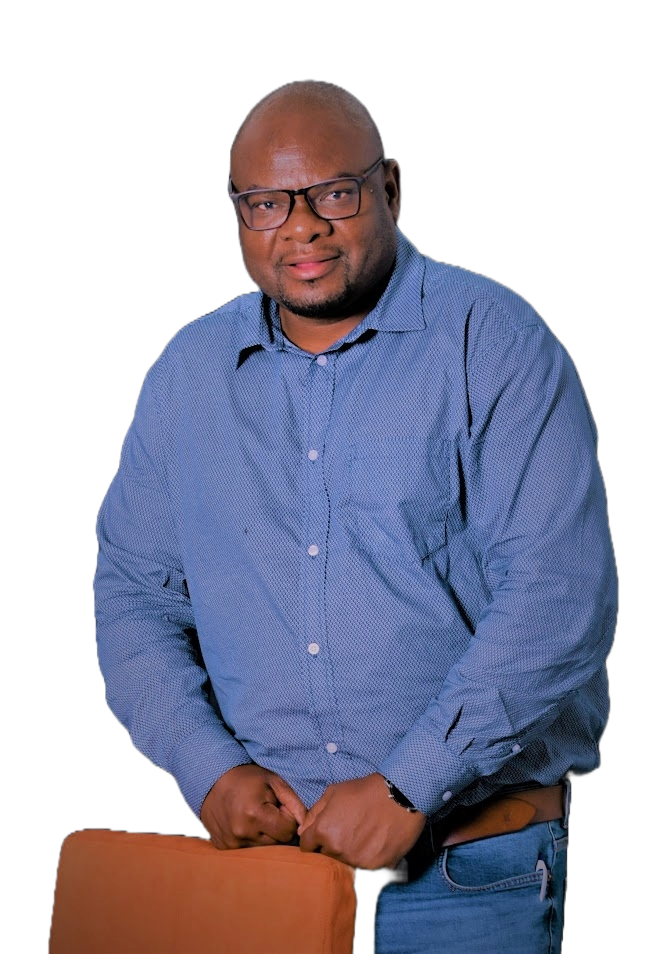
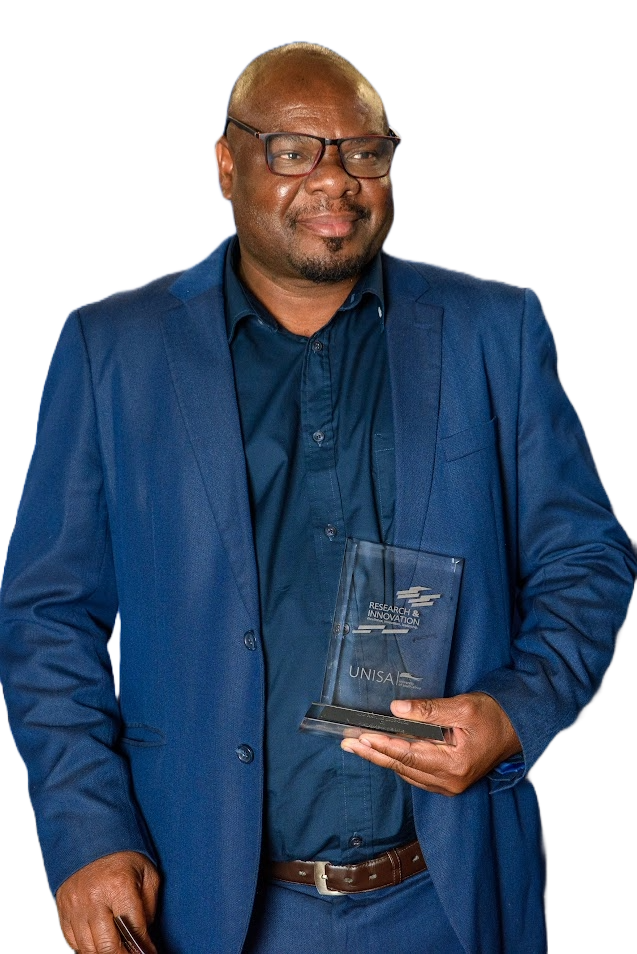
Ngoako is a C2 NRF research rated full Professor in the Department of Information Science at the University of South Africa (UNISA). He also serves as a representative of the Unisa Department of Information Science on the International Council on Archives (ICA). He is an ICA Regular Member of Section on University and Research Institution Archives (ICA/SUV), where he also serves as an executive member for bureau. He is also a regular member for ICA section for Archival education (SAE) and section for the National Assembly. He also serves ICA as a New Professionals mentor for year 2023. He is also a member of the South African Society of Archivists, where he serves on the National Executive Committee as Editor-in-chief for the Journal of the South African Society of Archivists from 2022 to date, and from 2018 to 2021 as Deputy Editor. Prof Marutha is also a review editor for the journal Frontiers in Research Metrics and Analytics. He serve as a Chairperson for Limpopo Provincial Archives and records service of South Africa Advisory Council (LPAAC), and serves as a member of the National Archives Advisory Council (NAAC) in the National Archives and Records Service of South Africa.He has published several books, chapters and articles in different national and international publications and presented conference papers. His research interest includes knowledge, archives, and records management, especially on patients and hospital records, electronic records, artificial intelligence, internet of things, cloud computing, Blockchain technology, enterprise content management, big data management and police case records security. The other field of his interest includes library management and marketing as well as Open Distance electronic learning (ODeL). His professional industry background includes working as an information and records manager as well as librarian in several public and private institutions over 13 years. He has been in the academic industry over five years so far. He holds Bachelor of Information studies and Bachelor of Information Studies honour from University of the North (UNIN)-now known as University of Limpopo (UL), Master of Information Science and Doctor of literature and philosophy from University of South Africa (UNISA). He serves as external examiner for master’s and doctoral research studies for over seven universities.
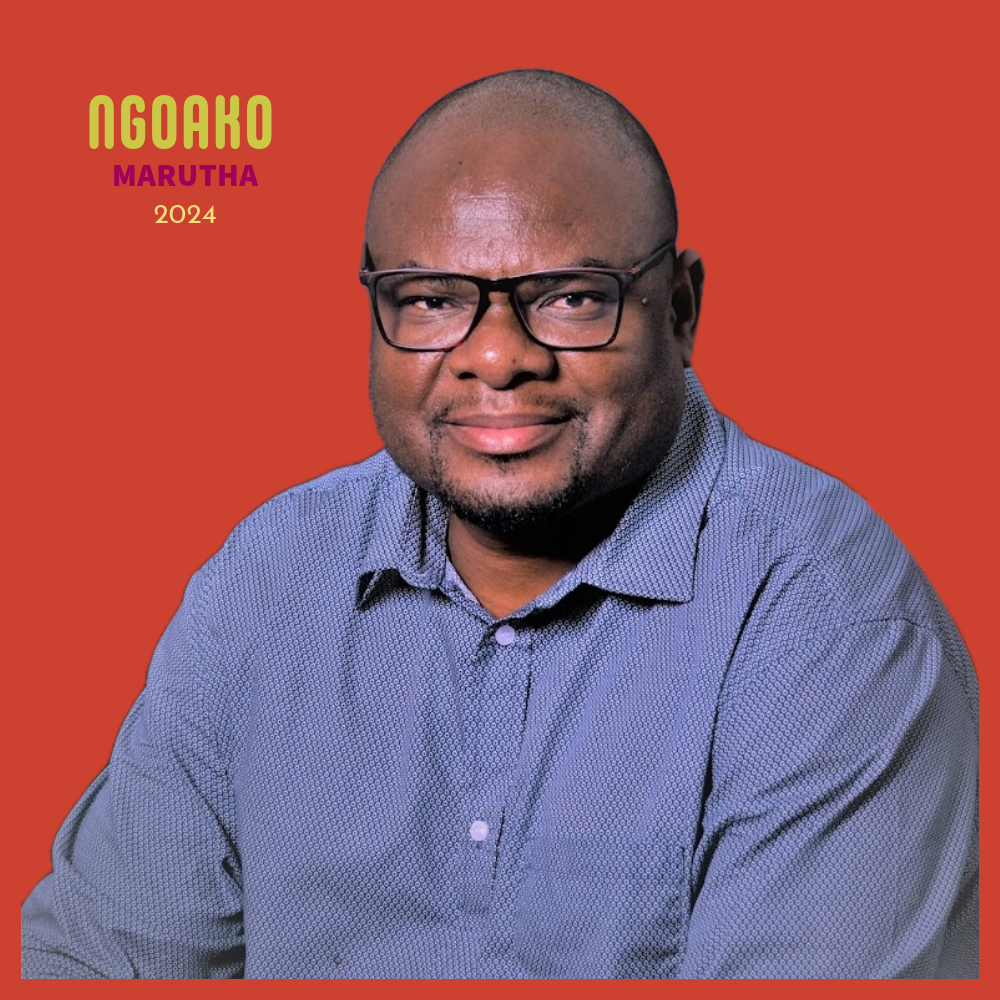
Prof Marutha Ngoako
Ngoako was born and bred at Ga-Sekgopo Village and he is the 7th son of Mrs Sekedi (Mamaropeng) Marutha (83 years old) and the late Mr Frans Marutha (1914-1981), out of 9 children. When he was born on the 09th May 1975, he found both his parents survived as farmworkers in the then apartheid government vegetable farmers at Mooketsi in Limpopo province, Greater Letaba municipality next to Modjadjieskloof. The income from the farmwork was only “from hand to mouth”. During those times his brothers and sisters were attached to ZZ2 farm school and had to work in the farm after school daily and weekends. His family then left the farm life and moved into Sekgopo Village during the year 1980, where they started surviving by the father’s social grant income although only afford basic traditional foods. His father passed away in the first year when Prof Marutha was just started his Sub A (Grade 1) in 1981 at Mantšha Primary School. His mother then started working in the surrounding tomato and cotton farms in which farmers transported her with other workers in truck daily from Monday to Saturday, until she started qualifying social grants in the year 1999 when she was 60 years old.
Prof achieved his primary education at Mantšha Primary School from Sub A (Grade 1) in 1981 and completed standard 5 (Grade 7) in 1987. He attended his secondary education at Motšheudi High School from 1988 to 1992 from standards 6 (grade 8) to standards 9 (grade 11). The school was more than 4 kilometers from home, and he were walking daily to and from school without money or lunchbox. In 1989, he dropped out of school due to circumcision (mountain) school attendance as a community tradition. In 1992 he failed standard 9 due to failing Northern Sotho (Sepedi) as first language and decided to change Motšheudi High School to join another nearby high school within the village named Kgolakaleleme High school in 1993. He completed his standard 9 and 10 with flying colors at Kgolakaleleme High school from 1993 to 1995. In 1995 he repeated his matric (standard 10/grade 12) because he was not satisfied with the school leaving certificate pass accomplished in 1994 and finally achieved his matric exemption in 1995 with university endorsement. He nearly dropped out of school for good after grade 9 before 1994 because parents could not afford the then examination fee imposed by the apartheid government. With the grace of God, the newly incoming democratic government abolished the examination fees effective from 1994 when he had to start with his matriculation studies.
After completing matric in 1995, he spent two years without school due to financial difficulties. He went to Gauteng in 1996, trying to seek for employment with no much success. Before this he also tried several government funding free careers such as Nursing, Police and Army with no promise. At some stages he got temporary jobs in the plots including training of German shepherds’ security dogs. Since the income from the temporary employment was not satisfactory, he coupled his job hunting with searching for bursaries. Finally he went back home to find himself working for Indian shops at Mooketsi shopping centre as a customer assistant and caretaker in 1997 before reaching opportunity for university study.
In 1998, Prof discovered the government educational loan called Tertiary education fund of south Africa (TEFSA), now called National Student Financial Aid Scheme (NSFAS). TEFSA only covered certain percentage of tuition/study fees and university students’ residents’ accommodation only. He then registered for Bachelor of Information Studies in the then University of the North (now University of Limpopo) in 1998. Since TEFSA was not covering registration, his mother had to borrow money from the business-people within the village to pay them monthly from the little income from the farm work and eventually from old age grant, and this was a regular task for every year before registration for the four years degree. His intention for joining tertiary education was just to supplement matric certificate with few tertiary courses for him to be preferable against other matriculants in the job-hunting field, because completing the degree was always appearing to be a dream that will never be reached. With the grace of God, he completed his four years degree, Bachelor of Information Studies with six (6) distinctions in 2001 and graduated on the 4 April 2002. Same year in 2002 he registered and completed his Bachelor of Information Studies honours degree with two (2) distinctions and graduated in 2003. During his final years of the undergraduate degree in the year 2000 and 2001 and in 2002 when he was doing honours degree, university offered him to assist with different academic and administrative tasks coming with limited stipends such as Library assistant, Assistant lecturer, student administrative officer for bursary applications, Students’ mentor, and students residents representative among others.
After his honours degree Ngoako took break from furthering his studies from 2003 to 2008 due to unstable short term contract jobs. In 2009, he then resumed his studies by registering full dissertation Master of Information Science degree with the University of South Africa (UNISA), completed in 2011, within record time, and graduated in 2012. In 2013 he registered his doctoral (PhD) degree in Information Science with the University of South Africa (UNISA), completed in 2016, within record time, and graduated in 2017. Both his master’s and PhD degree studies were fully funded by the University of South Africa (UNISA).
He worked as a Library and information specialist intern at the Council for scientific and industrial research (CSIR), Pretoria from 2003 to 2003. In 2004 he also worked short term contracts as a Senior librarian at PALMA development Group (PDG), Parktown-Johannesburg; Cataloguing librarian at Vaal University of Technology Library, Vanderbijlpark; and as Library technician at Monash University Library, Roodipoort-Johannesburg. Towards the end of the year 2004 he was appointed to a permanent job position as a departmental librarian for Limpopo department of sport arts and culture in Polokwane, to which he had to develop and implement library for the department. The library was implemented and fully functional when he left the Limpopo department of sport art and culture in 2005, to join Voortrekker hospital at Mokopane where he was appointed as a Deputy Manager for Information and records management to establish the information and records management programme for the hospital. He left Voortrekker hospital in the late 2008 to join the South African Social Security Agency (SASSA) Free State Region at Bloemfontein where he was appointed as a Beneficiary Maintenance Records Manager to transform social grants beneficiary records management programme. He then left SASSA early in 2011 to join ST Rita’s regional hospital at Jane Furse as a Manager for Information and records management and in early 2012 he was transferred to Limpopo provincial department of health to take responsibility for human resources records management as a manager responsible for all the health institutions within the province. Late in 2017 he then left Limpopo department of health to join UNISA as a senior lecturer at Pretoria after celebration of his achievement for PhD degree. At UNISA he was promoted to Associate Professor from January to May 2021, and then from May 2021 he was further promoted to a Full Professor to date.
Within the first five years in academic job he was able to publish more than twenty (20) articles in accredited national and international journals, and four (4) book chapters in the international accredited book publishers. He was also able to supervise three (3) masters and three (3) PhD students to completion. He is currently supervising more than 20 masters and PhD research projects. He is teaching archival principles and practice for the programme, research in archives and records management, and information and knowledge governance for honours. His research interest includes knowledge, archives, and records management, especially on patients and hospital records, electronic records, cloud computing, Blockchain technology, enterprise content management, big data management and police case records security, library management and marketing and Open Distance electronic learning (ODeL). He is a departmental chairperson for Research and Innovation Committee at UNISA and also serve as a member for University Senate Committee, College (CHS) Research and Innovation Committee, departmental higher degree committee, departmental masters and doctorate (M&D) committee, departmental Community engagement committee, and departmental executive management committee. He also serves as a representative for UNISA department of Information Science in the International Council of Archives (ICA), and he is an ICA Regular Member of Section on University and Research Institution Archives (ICA/SUV). He is also a member of the South African Society of Archivists and serve in the National Executive committee as an Editor in Chief for the Journal of the South African Society of Archivists. He is also a Review Editor for Frontiers in Research Metrics and analytics journal. He presented several national and international conference papers. He also serves as external examiner for several universities in South Africa (include UCT, UL, Forth hare, UKZN, DUT) and also review articles for publication in several national and international journals.